
About the Hancock County Chancery Clerk
Tiffany Lee Cowman serves as the Hancock County Chancery Clerk. She was elected to the office in 2023 and brings a background in customer service, business management, and leadership. The clerk is one of two clerk offices in the county. The Chancery Clerk handles land and chancery court business, while a separate Circuit Clerk handles circuit cases and marriage licenses.
The Chancery Clerk runs records out of two physical offices. The court-records office sits inside the historic courthouse downtown, and a second land and tax office sits a few miles away at the county government complex. Both keep the same weekday schedule. The role of the clerk reaches back generations in Mississippi, since the Chancery Clerk records every deed, mortgage, and estate filed in the county.
The official staff page for the clerk lists her direct contacts and confirms the elected start. The lead-in below links that source page for anyone who wants the clerk's own description of the role. The Chancery Clerk profile page introduces Tiffany Lee Cowman and her duties.
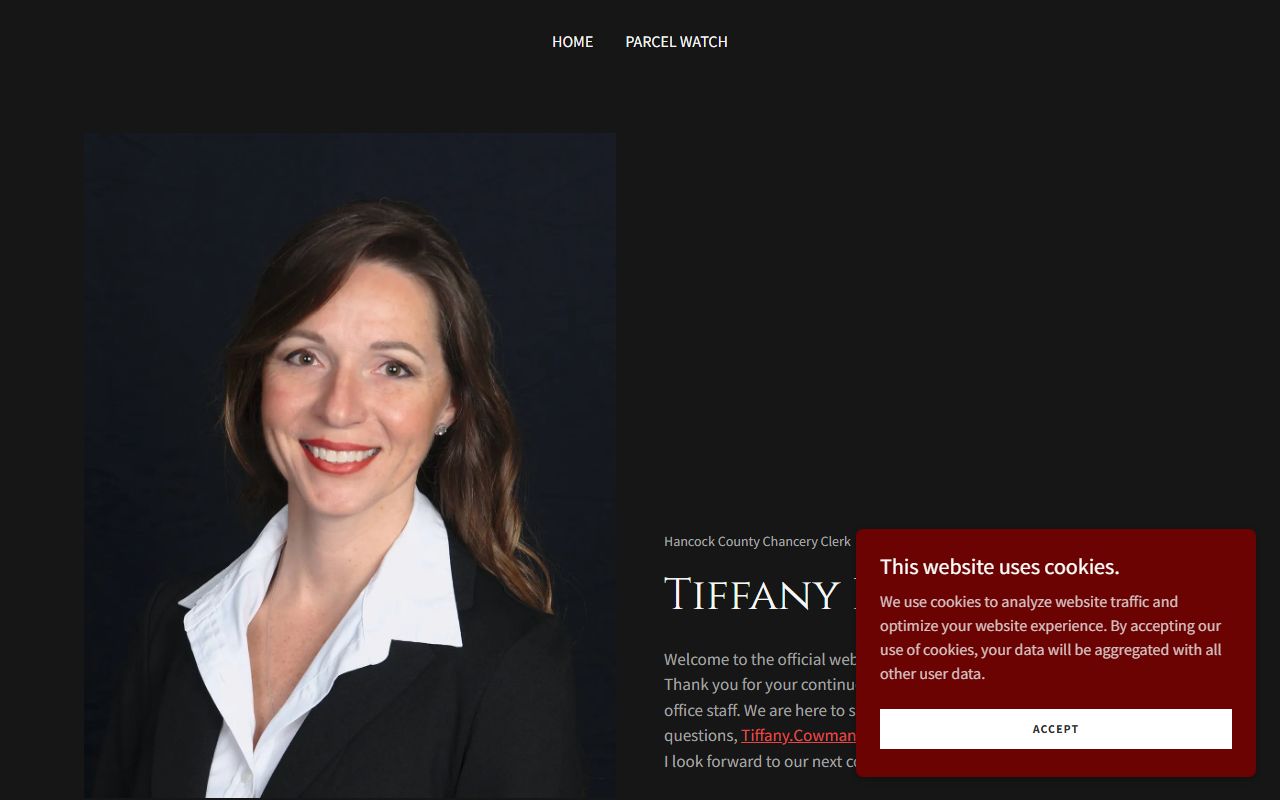
That page sets the tone for how the office works with the public. Contact details for the main court-records office appear in the card below.
Chancery Clerk Court-Records Office
Clerk: Tiffany Lee Cowman
152 Main Street, Suite A
Bay St. Louis, MS 39520
228-467-5406
Tiffany.Cowman@co.hancock.ms.us
Mon-Fri 8 a.m.-5 p.m.
What the Chancery Clerk Handles
The Chancery Clerk in Hancock County wears many hats. The office records property documents, supports chancery court cases, collects certain tax payments, and provides a passport service to residents. It also serves as clerk to the Board of Supervisors and keeps the official minutes of board meetings. These duties run through both the downtown court office and the government complex land office.
The core services the office provides include the following.
- Land records, including deeds, mortgages, liens, and plats
- Parcel watch alerts that flag new filings on a property
- Delinquent tax payments searched and paid by parcel number
- Chancery court files such as probate, estate, and guardianship matters
- Board of Supervisors minutes and county fiscal records
- Passport applications with photos taken on site
Land and tax functions are based at the government complex, not the courthouse. The land office handles recording, parcel research, and tax questions tied to a specific property. Its address and phone differ from the court office, so callers should pick the line that matches their need.
Chancery Clerk Land & Tax Office
Clerk: Tiffany Lee Cowman
854 Highway 90, Suite B
Bay St. Louis, MS 39520
228-467-5404
Karla.McCarty@co.hancock.ms.us
Mon-Fri 8 a.m.-5 p.m.
Hancock County Land Records Online
Land records are the busiest part of the Chancery Clerk's online service. The county hosts a searchable land records system that covers documents recorded from May 2005 to the current date. New filings are uploaded each day at 7 p.m., so a deed recorded today should appear that evening. A deeper history of older Hancock County property records sits on public computers at the Government Annex, where staff can help with the full chain of title.
Two extra tools round out the land service. Parcel watch lets an owner or buyer register a parcel and get an alert when a new document touches it, which helps catch fraud or surprise liens. Delinquent tax lookup lets a user search by parcel number, review what is owed, and pay overdue amounts. Both run through the clerk's land platform rather than the court index.
The clerk's online land records portal is the entry point for deed and mortgage searches, parcel watch, and tax payments. Records found online are a finding aid. For a certified copy or the official version, the land office at the government complex remains the source of record.
Note: land records cover May 2005 to current online, so older deeds and chains of title must be researched in person at the Government Annex public computers.
How to Request a Chancery or Land Record
Requesting a record from the Chancery Clerk follows a clear path. The right office depends on the record type. Land, tax, and historical documents come from the government complex, while probate, estate, and other chancery court files come from the courthouse suite. Gathering the key details first keeps the process short.
- Decide which record you need and which office holds it. Land and tax records go to the government complex; chancery court and estate files go to the courthouse court-records office.
- Collect identifying details. For land records, have the parcel number, owner name, or book and page. For court files, have the case style, party names, or estate name.
- Search the matching online tool first. Use the land records portal for deeds and tax data, then note the document or case reference you find.
- Contact the correct office. Call the land office at 228-467-5404 for property records or the court office at 228-467-5406 for chancery and probate files.
- Request copies and pay the fee. Copies of historical and recorded documents are made for a fee, collected before the office releases the record.
- Pick up in person or arrange delivery. Visit the counter during weekday hours, or ask the staff how a copy can be sent.
For records that are not certified and not handled by a single clerk, the county also accepts a formal public records request through the County Administrator. That route applies a seven-working-day response window and a copy fee.
Chancery Clerk Records and Services
Several record types pass through the Chancery Clerk, and each has its own access channel. The table sorts the most requested services, where they live, and how the public reaches them. It helps callers route a question to the right office on the first try.
| Record or Service | Office | How to Access |
|---|---|---|
| Deeds, mortgages, liens | Land & tax office | Online portal or in person |
| Parcel watch alerts | Land & tax office | Register online by parcel |
| Delinquent tax payment | Land & tax office | Search and pay by parcel |
| Probate and estate files | Court-records office | In person or by phone |
| Guardianship filings | Court-records office | In person or by phone |
| Board of Supervisors minutes | Court-records office | In person or records request |
| Passport application | Chancery Clerk | In person, photos on site |
The county staff directory lists the courthouse court office and the government complex land office side by side. The lead-in below links that directory so visitors can confirm the right counter before they drive over. The Chancery Clerk staff directory shows both office addresses and phone numbers.

That directory keeps the two offices clearly separated. Use it to match a record type to the correct location and number.
Probate and Estate Filings
Probate in Hancock County runs through the Chancery Court and the Chancery Clerk. The clerk opens the file when a petition to probate a will or open an estate is filed. Mississippi chancery jurisdiction covers wills, administrations, guardianships, conservatorships, trusts, minors' settlements, and related fiduciary work. The clerk stores each filing, from the original will to the final accounting and closing order.
A typical estate file grows over time. It may hold the petition, the will and any codicils, the order admitting the will, letters testamentary or of administration, the oath and bond, notice to creditors, an inventory, claims against the estate, petitions to sell property, and the final distribution. Sensitive matters get different handling. Adoption files are confidential, and guardianship or mental-health items tied to a minor or a commitment are restricted rather than openly searchable.
The county does not publish an official probate filing fee schedule online, so cost questions are best confirmed directly with the court-records office before filing. More detail on opening an estate and the chancery process sits with the county probate records resources, which track the same court files this office maintains.
Note: Hancock County does not post an official probate fee schedule, so filers should confirm current filing and copy costs with the court-records office in advance.
Chancery Clerk Versus Circuit Clerk
Two clerks share the county, and they do not hold the same records. Sending a request to the wrong one is the most common delay. The Chancery Clerk keeps land records and chancery court files. The Circuit Clerk keeps circuit civil and criminal case files and issues marriage licenses. Divorce files, on the other hand, are chancery records because Mississippi Chancery Courts hear domestic cases.
A short split makes the divide easy to remember.
- Deeds, mortgages, and probate go to the Chancery Clerk
- Divorce, guardianship, and estate files go to the Chancery Clerk
- Marriage licenses and certified marriage copies go to the Circuit Clerk
- Circuit civil and criminal case files go to the Circuit Clerk
Anyone who needs a marriage license or a circuit case file should start with the Circuit Clerk instead of this office. The county directory that points to the Chancery Clerk site confirms which records the office maintains. The lead-in below links that county page. The county Chancery Clerk page redirects to the official clerk site and its service list.
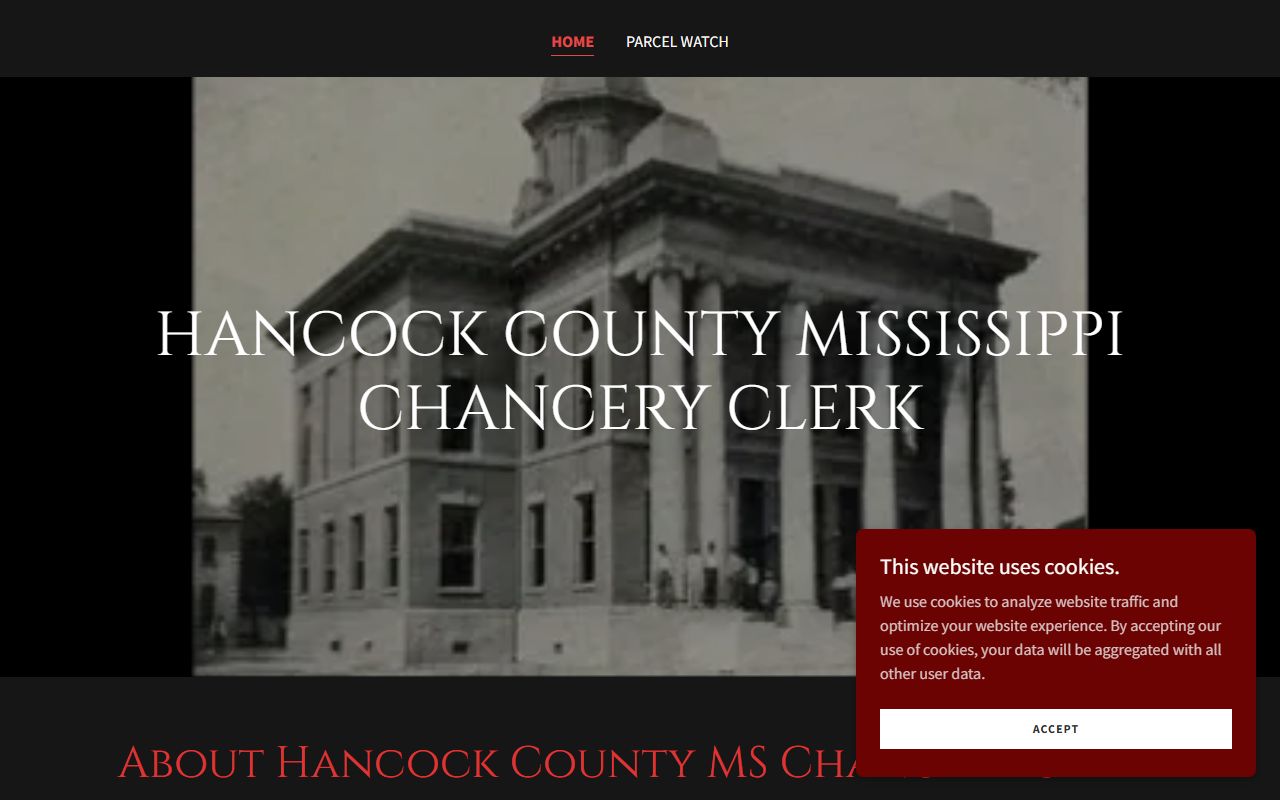
That redirect lands on the clerk's own site, where land records, parcel watch, and chancery resources all appear together.
Historical Records and Passport Service
The Chancery Clerk holds a deep historical archive for Hancock County. Older property and county records can be viewed in person at the Government Annex on weekdays during regular hours. Staff can make copies of these documents for a fee. Online access to the full historical set was described as coming in the future, so for now the annex computers and counter remain the way to reach the oldest files.
The office also offers a passport service for residents. Applicants can apply at the Chancery Clerk and have the required passport photos taken on site, which removes a separate errand. Hours match the rest of the office at Monday through Friday, 8 a.m. to 5 p.m., and the office is closed on weekends.
The historic courthouse that houses the court-records office is itself a Mississippi Landmark in the Old Bay St. Louis Historic District. That history is fitting for an office that preserves the county's land and family records across generations.